

Loading Isotherm Ireland...
External Wall Insulation & ICF Specialists
Loading Isotherm Ireland...
External Wall Insulation & ICF Specialists
Learn how dry lining insulation transforms cold rooms, find out about SEAI grants, and connect with vetted local drylining contractors.
Drylining (often spelled dry lining insulation) is Ireland's most popular form of internal wall insulation. By adding high-performance insulated drylining boards to the inside of your external walls, you can prevent heat loss, eliminate drafts, and lower your energy bills.
The process of dry lining walls is especially useful for older houses built with solid stone or concrete blocks, which do not have a cavity that can be pumped. This dry line insulation acts as a thermal barrier, trapping heat inside and bringing your rooms up to modern comfort standards.
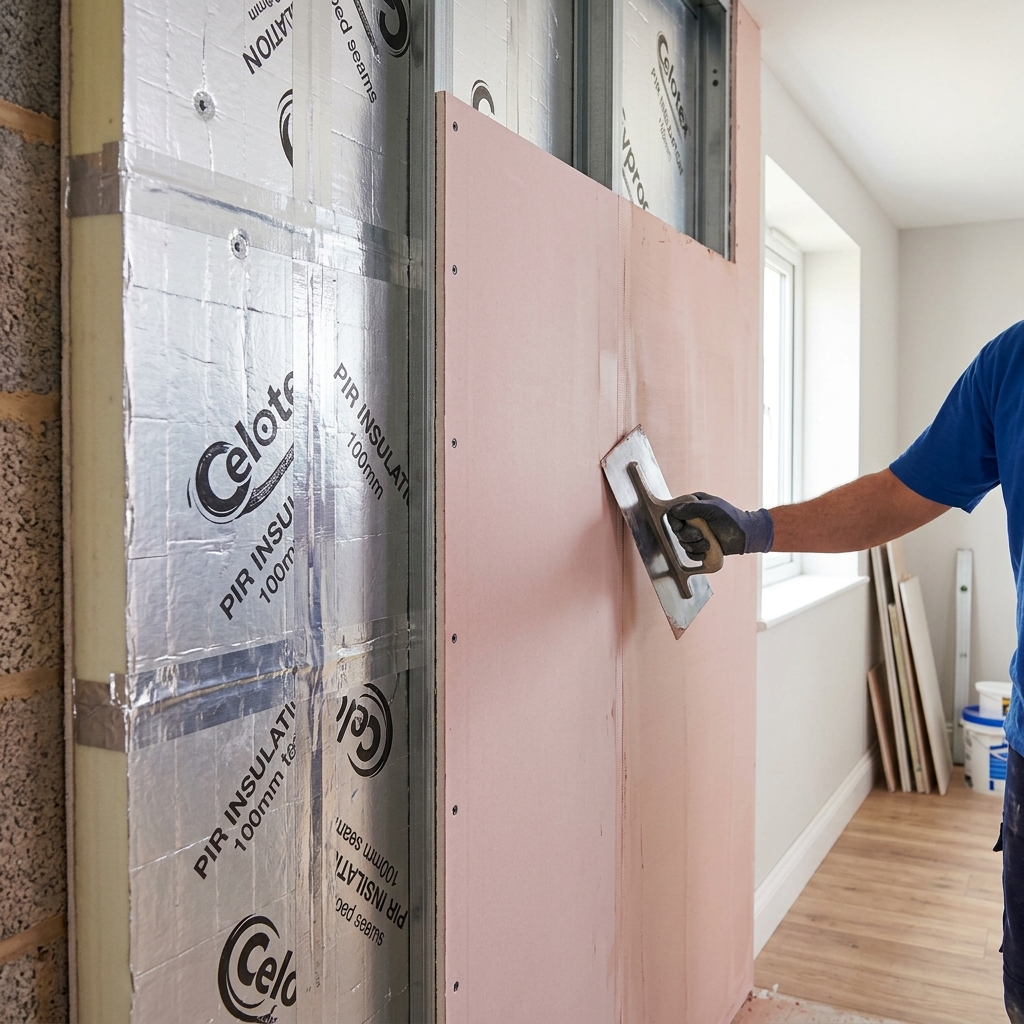
When undertaking a drylining project, installers typically use one of two main methods to secure the system:
Whichever method is selected, ensuring a perfectly sealed vapour control layer is critical. This prevents warm, moist indoor air from penetrating behind the boards and condensing against the cold outer wall.
Eliminates cold wall surfaces for immediate thermal comfort.
Reduces heat loss by up to 35%, lowering energy costs.
Improves your Building Energy Rating, boosting property value.
Access up to €4,500 in government grants to offset installation costs.
Cost-Effective: Significantly cheaper upfront than external wall insulation (EWI).
Aesthetic Preservation: Perfect for brick or stone-faced buildings where you cannot change the exterior look.
Weather Independent: Works are completed entirely indoors, so installation can happen year-round.
Space Loss: Reduces internal room dimensions by approximately 100mm per external wall.
Internal Disruption: Rooms must be completely cleared, and fixtures (sockets, radiators) moved.
Thermal Bridging: More challenging to insulate junctions where internal walls and floors meet the external structure.
Because proper installation is critical to prevent condensation, you should always choose a fully registered, vetted professional. Below are certified contractors available for your project:
Loading Official Isotherm Quotation...
Preparing certified Baumit & NSAI specifications
Get free, no-obligation quotes from trusted local drylining walls specialists in your area.
Find Installers